
Miami
Sweating Myself Stupid at the Formula 1 Crypto.com Miami Crypto.com Grand Prix Presented by Crypto.com

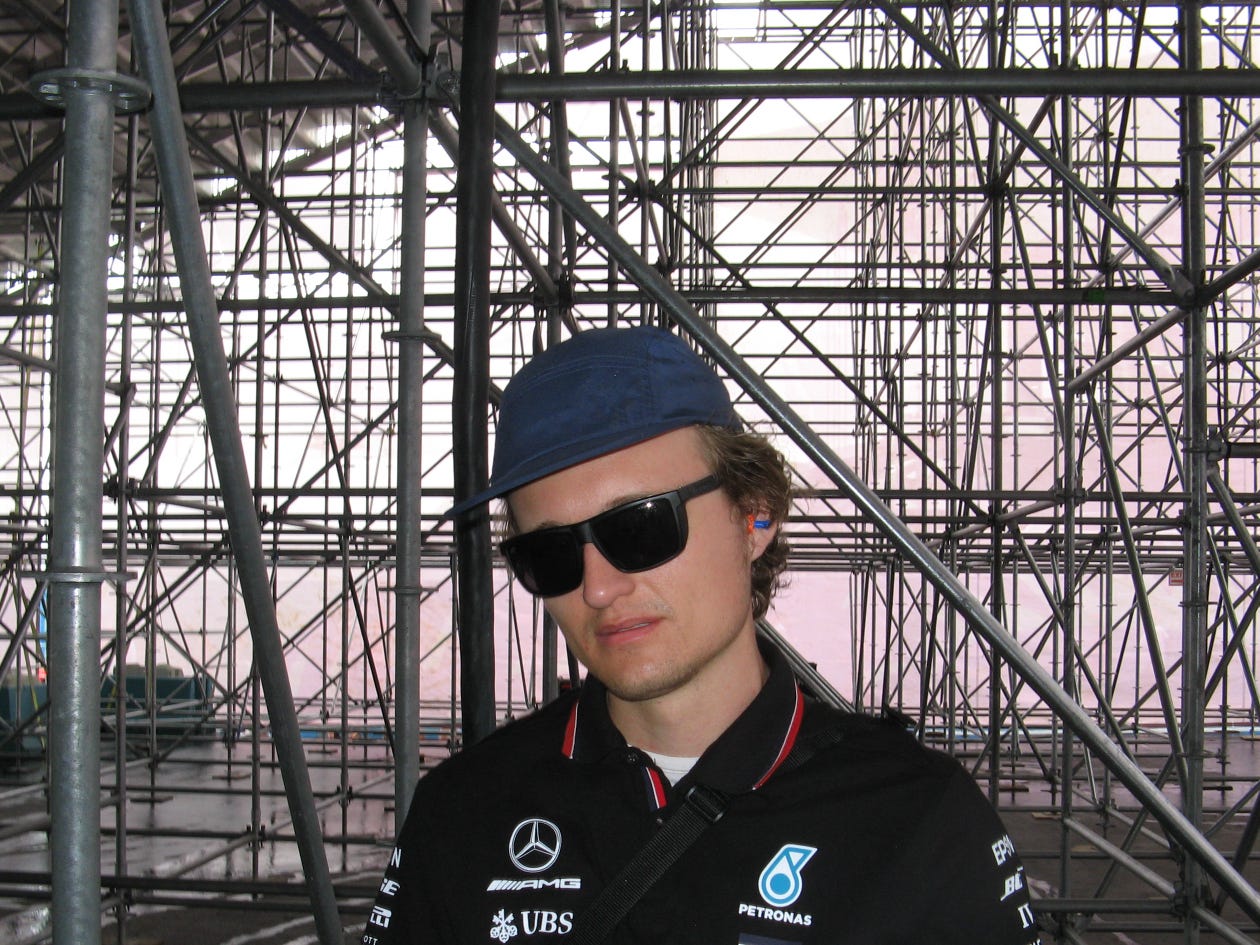
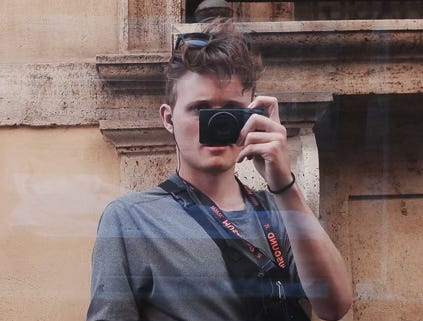
The photos from this essay were taken with a Canon PowerShot A710 IS. While it may have been cutting edge for 2006, it is certainly, and hilariously, not the case anymore. Each photo has about half the pixels of your standard iPhone shot, and you can take one about every 10 seconds (if you’ve been a good boy, that is).
It sits at a tricky place in the history of cameras. A casualty of Moore’s Law no doubt, but it hasn’t yet reached the warm, fuzzy resurgence of its film camera ancestors. Obsolescence without nostalgia.
It felt right to bring it to a Formula 1 race because the organization, down to its very core, wants the newest, the best, and the most powerful equipment, cars or otherwise. If their broadcast crew’s cameras aren’t literally mounted to helicopters, then they’ll be connected to lenses the size of a foghorn.
They are fully capable of using their own equipment to document this event for a broadcast. Bringing “my best equipment” would just feel like cosplaying as an unpaid marketing intern. What follows is my attempt to do something different (read: intentionally of poorer quality).


What you don’t know won’t hurt you, yeah
Ignorance is bliss
I’m a happy idiot
Waving at cars
“Happy Idiot” by TV on the Radio
What makes an empire successful?
Probably depends on who you ask. At the Mongolian Empire’s peak, Genghis Khan and his descendants occupied over nine million square miles in Asia and Europe. Having this much surface area to tend to created administrative challenges on an insane scale. If you worked for the Khan, you needed to have answers to questions like “how soon can we get updates to people 2000 miles away”, or “how do we feed millions of subjects without hunting food sources to extinction”. The challenges of logistics and communication became a matter not of countries, but continents.
Empires never really disappear, they just reinvent themselves around new sources of power, and few modern enterprises carry on this tradition of seizing power quite like Formula 1. There’s no better word than “empire” to describe what this organization has accomplished in the previous 10 years. Yes, there are plenty of choices when it comes to motorsport, but there is no meaningful competitor, no “Pepsi” to rival what’s on offer in 24 races across 21 countries.
I was a spectator at the 2026 Miami Grand Prix, one of the three races on the schedule that takes place in the US. It is a spectacle on a stupefying and sometimes horrifying scale.
That’s the word I keep coming back to: scale. It’s almost too small to think of this as a spectator sport. We’re dealing with crowd sizes at the same level of Coachella or the D-Day landings.
In 2026, the Kaseya Center had about 808,000 people in attendance across the Miami Heat’s 41 regular season home games (about twenty thousand attendees per). The Miami Grand Prix saw thirty percent of the Heat’s total home game attendance for the entire season in just three days.
Formula 1 is the highest average attendance of any professional sport in the world. Pick a sport. American Football, Japanese Baseball, Australian Rugby, any of European Football Leagues. They’re all small kickbacks with a few close friends compared to what the average host city sees on race weekend.
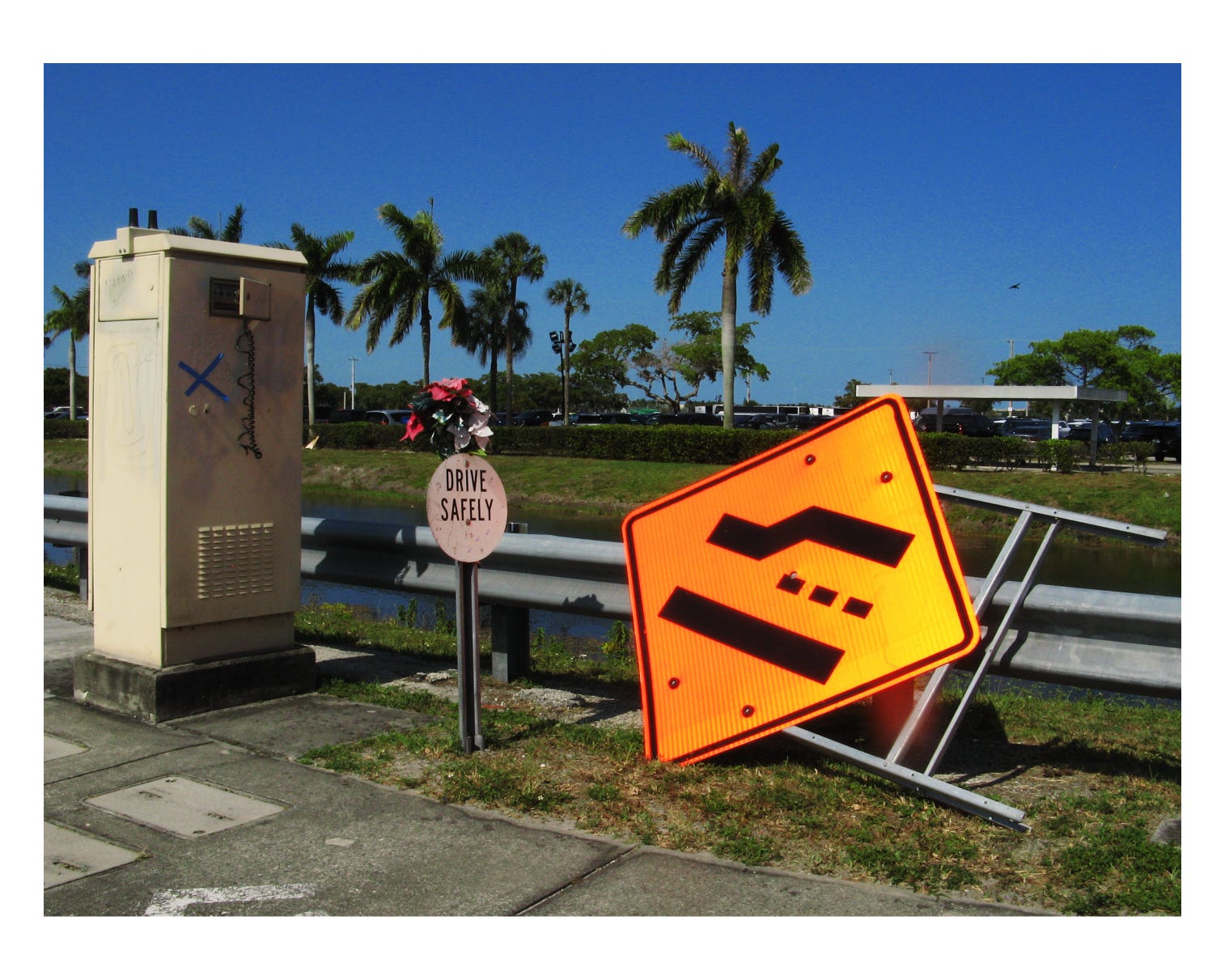
Before even entering the complex (used as both noun and adjective), I got a sense of the magnitude on the drive into town. When opening up Maps to find the address for our vacation rental, we found city roads and their congestion looking like yellow noodles covered in Prego. This was the first of many oxymoronic realizations: an event dedicated to the majesty of the automobile was hosted by a city designed to make you hate driving. The city of Miami, and I’m not even sure yet if I mean this as an insult or as a compliment, was like a laptop built in 2004 running the latest 2026 software of Formula1.exe. The laptop can do it, and that’s pitifully endearing, but you know it’s a matter of time until the graphics card explodes. That isn’t a warm breeze you feel on the beach. It’s the ventilation fan trying to keep the city’s hard drive from melting into the Keys.
It was apparent from the start of the day that the city was deploying every available cop, bus, and traffic cone in an effort to keep this event and its crowd under control. Don’t get the wrong impression; Formula 1 fans aren’t particularly prone to hooliganism. How can they be when the teams being cheered for are, at the end of the day, publicly traded manufacturing companies. If there weren’t small handsome men from Europe in the cockpit of these machines, you might as well be cheering for a stock price.
No, they needed these extra resources because of the sheer volume of people, cars, bowel movements, and celebrity businessmen (list is ordered by respect warranted) passing through Miami Gardens. It all needed to go somewhere. Preferably not in one big pile.
Credit where it’s due: My friend who has attended other races tells me that his get-in/get-out experiences here were far better than what he experienced in Austin and Barcelona. Both were a nightmarish mixture of coach buses and overfilled subway stops. As much as we can overthink the fact that we had to provide a QR code to park on the football field of an elementary school, we did not encounter any real bottlenecks getting in or out of the race grounds.
In a way, this explains the rise in Formula 1’s appeal, especially in the United States. Unless you live in one of maybe three cities that invests meaningfully in public transportation, then you rely on a watered down version of an F1 car to go anywhere. It’s rarely a glamorous experience, if ever. Everyone, and I mean everyone has a story about something awful that happened to them or someone they know while behind the wheel. You can ask anyone and they’ll have the story organized and ready to fire off faster than any LLM. Antarctic researchers who drive snow cats probably complain to each other about the near misses with penguins or the pesky snowmobilers that split lanes. It’s a shared experience that everyone relates to, even when it’s making us like each other less.
In Driver’s Ed (in the United States, at least), there is a classroom portion where you sit behind a desk and learn about the horrors of everything car related. From drunk driving to road rage incidents involving crossbows, this is the world of driving you are taught to understand. It’s loud and dangerous and inefficient and toxic, both environmentally and socially.
But not when small handsome men from Europe do it in Miami.
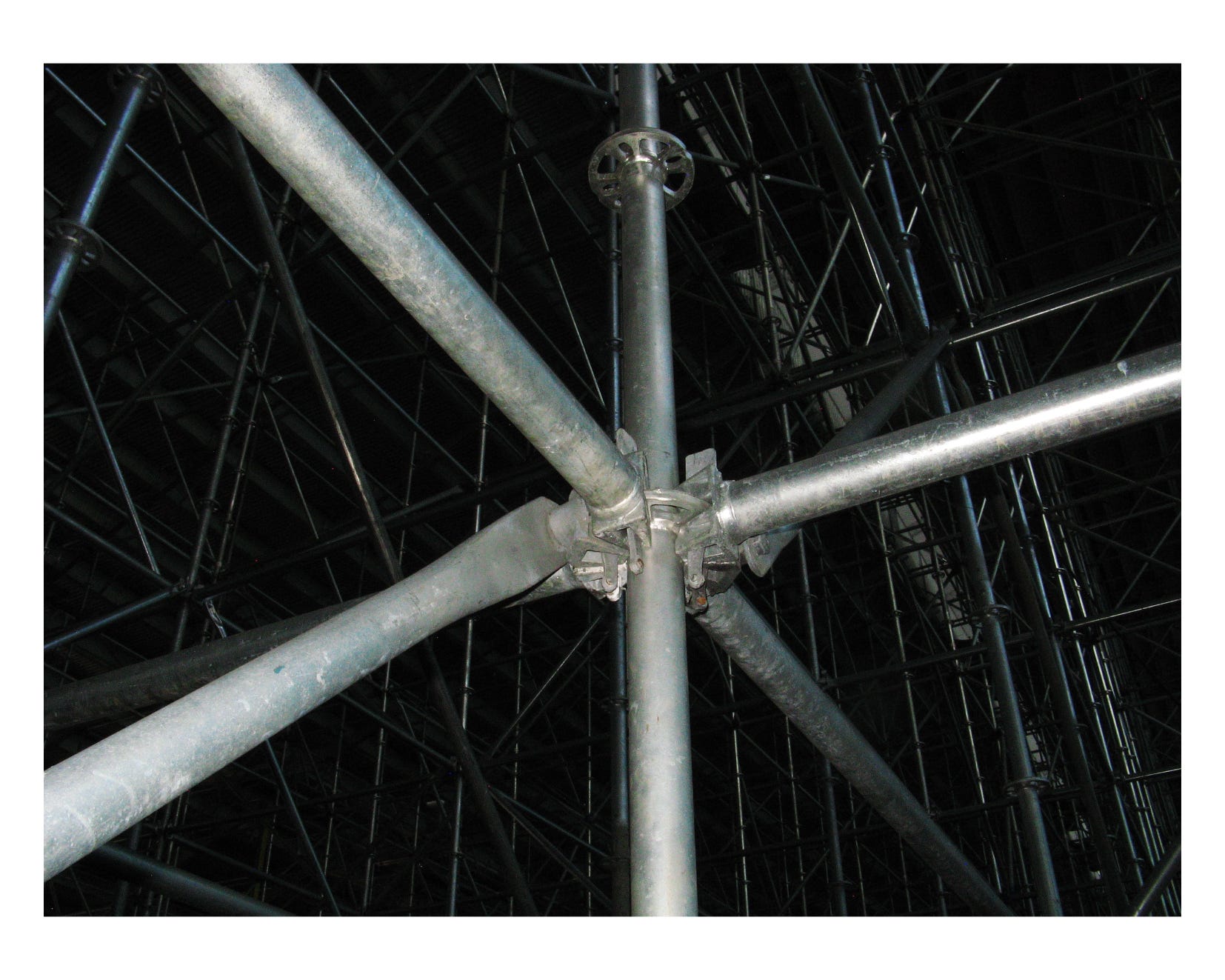
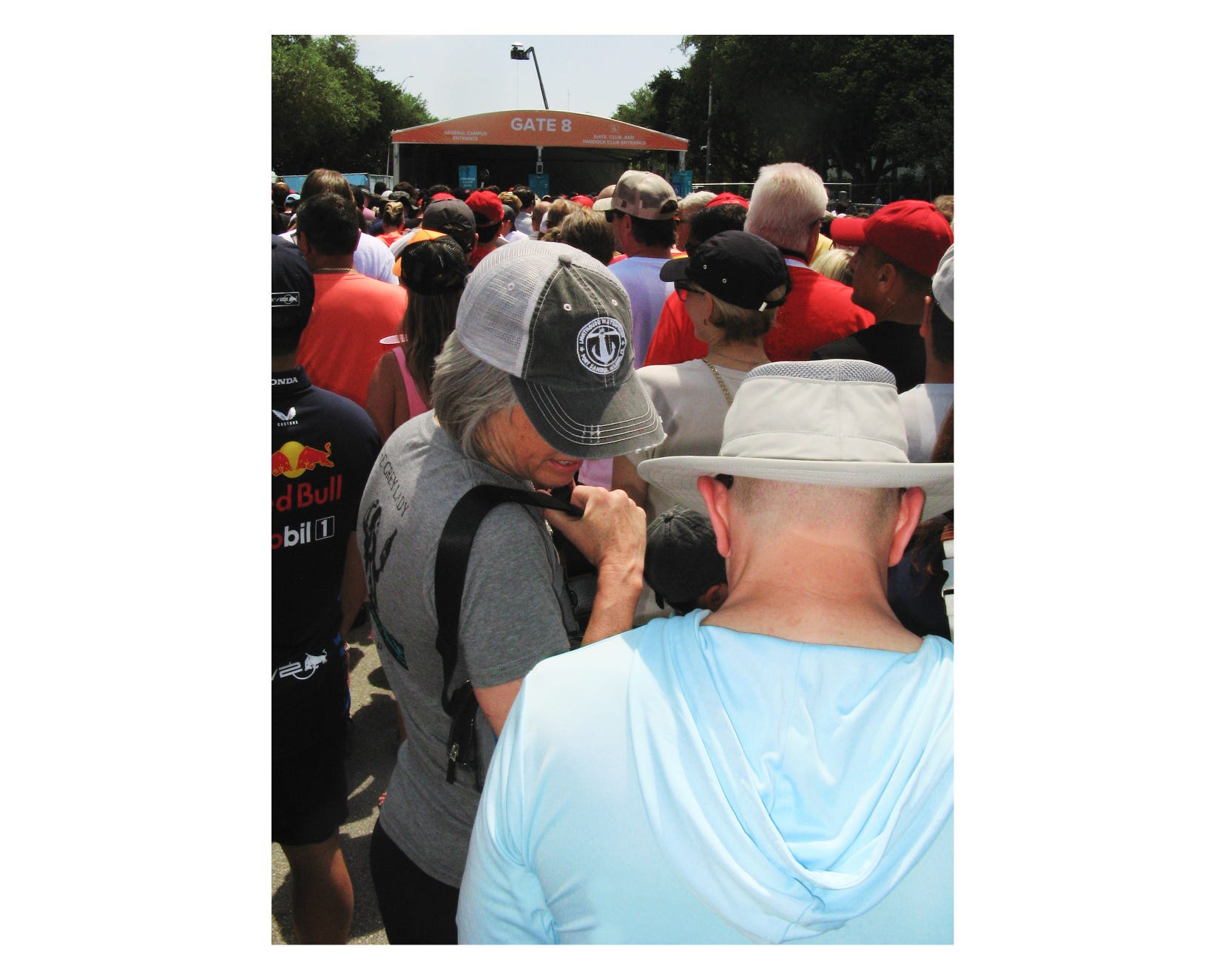
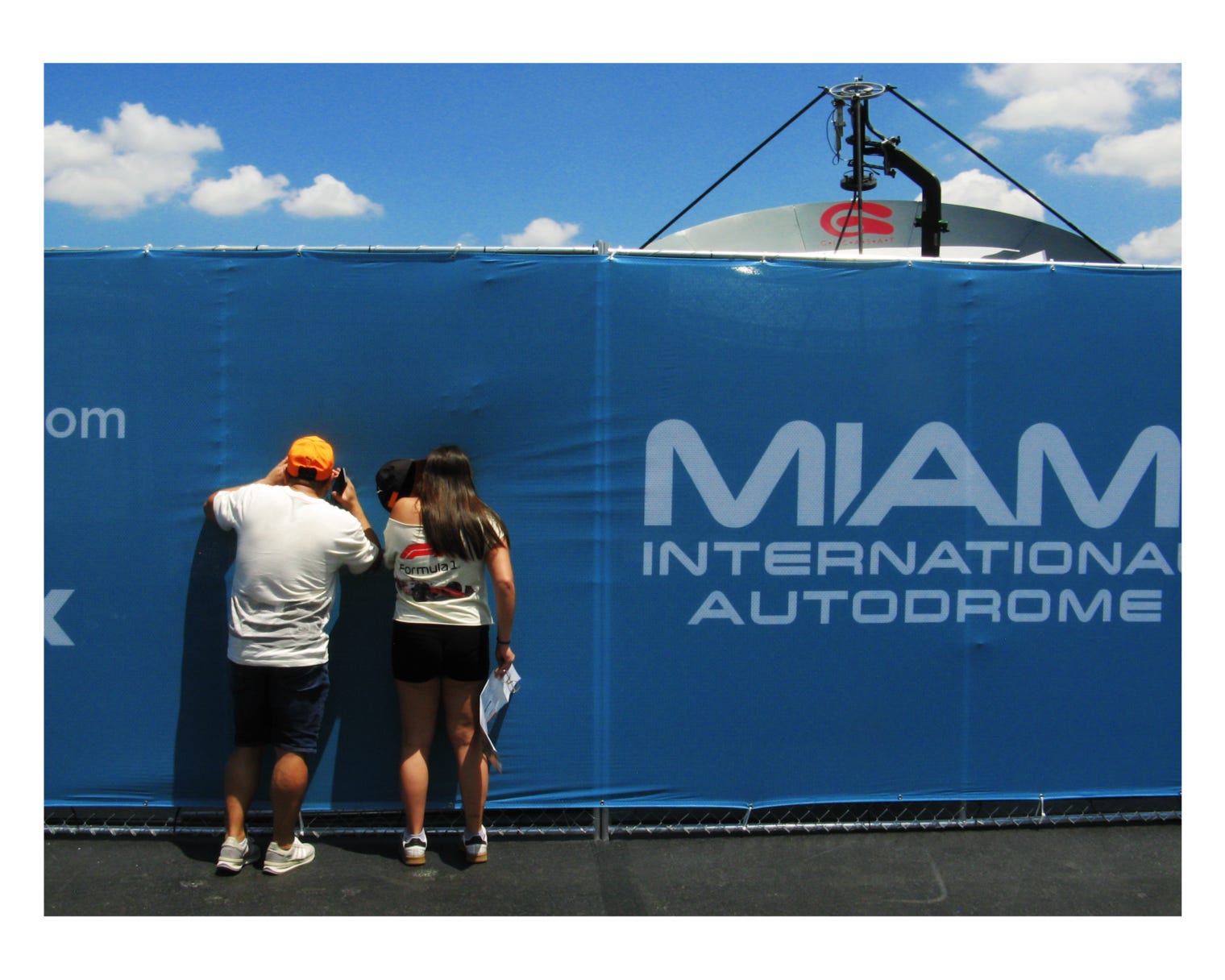
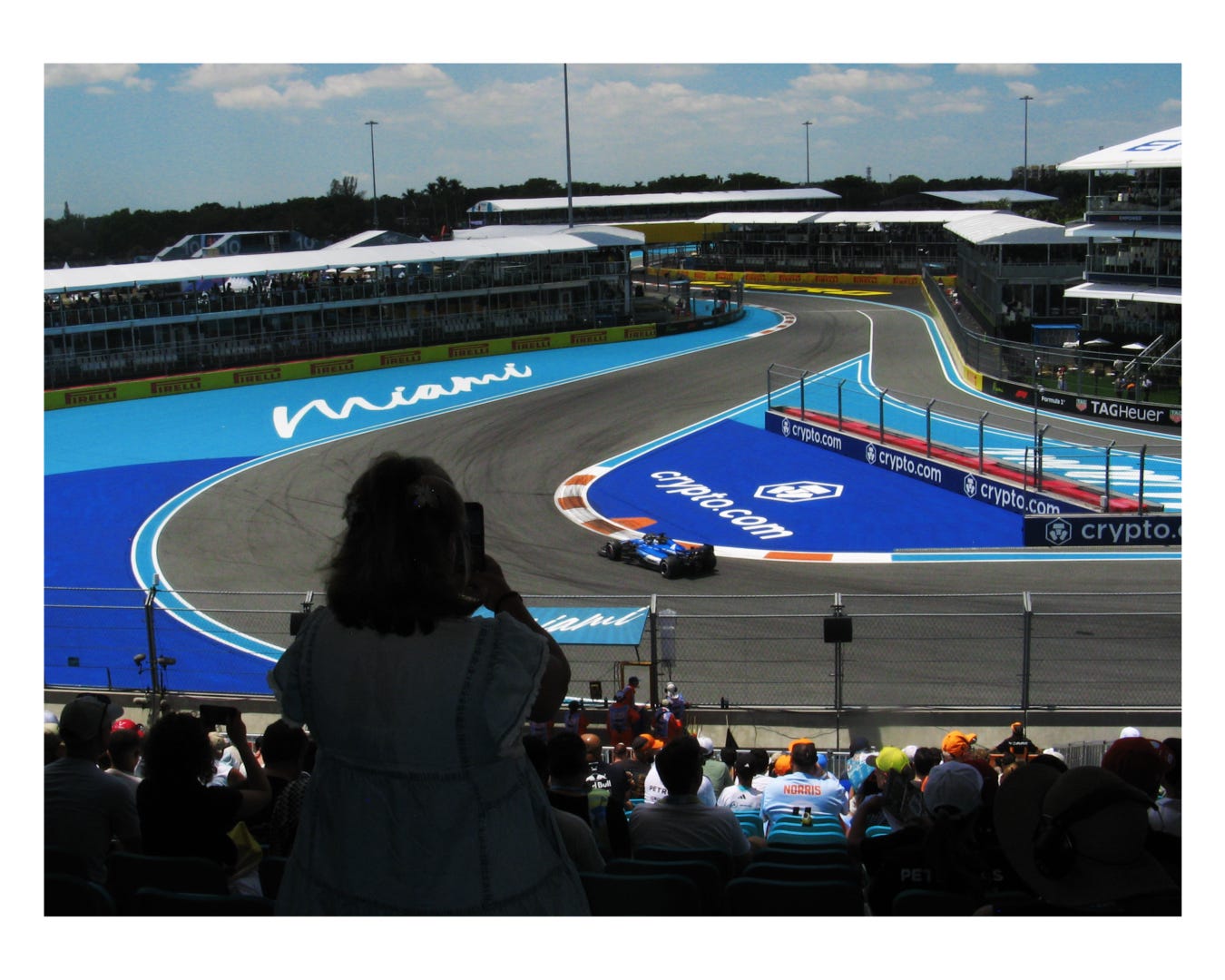
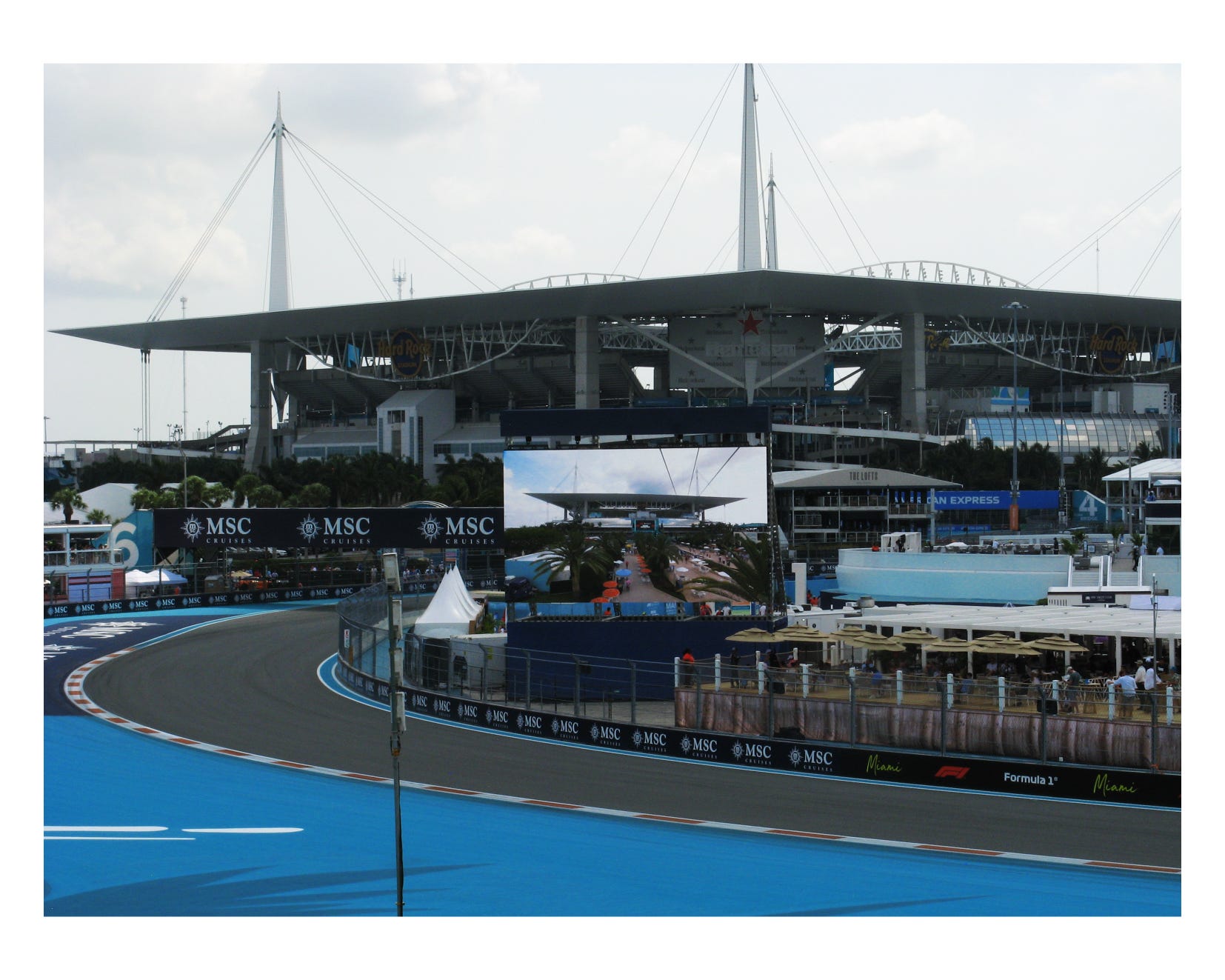
Miami International Autodrome is referred to as a “temporary track”. As the term implies, aesthetics are secondary to both function and scalability. Like a Spirit Halloween, the Autodrome spends more time as a pile scaffolding in a warehouse somewhere than it does as a finished race course. Ever see a science fiction movie where there’s an alien spaceship crash and the scientists set up a compound around it with and wire and plastic? That’s basically what this track feels like, but if the little green men in the ship tried to sell you a $75 t-shirt.
The $75 t-shirt is also the answer to your questions about why Miami, specifically the Hard Rock Arena, is this hub that hosts everything from a Formula 1 race to an NFL franchise to concerts for the biggest acts in the world. It is the lightning rod of Miami tourism, penetrating the clouds, searching for any conductive particles that can be turned into FOMO and then distilled into merch sales.
It’s nothing new, really. The city’s origins are rooted in eliciting investment out of big businesses. Miami founder Julia Tuttle purchased hundreds of acres of land on the banks of the Miami River in 1891, right around the time railway lines started developing routes all across the nation. Almost immediately, she became pen pals with Standard Oil founder Henry Flagler.
Later, a cold snap obliterated most of Florida’s citrus industry. Not Miami, though. News began to spread about how the southernmost region of Florida wasn’t as prone to frost risk. Flagler’s eyes then turned into giant dollar signs: A less volatile climate means a more reliable orange crop. A reliable orange crop means a steady stream of products that needed to be transported to other parts of the country. Choo Choo! He dried himself off after swimming in his pool of gold coins and struck a deal with Tuttle to bring the Florida East Coast Railway to Miami.
With it would eventually come other noble pursuits like investment banking, real estate, and cryptocurrency. These are all good and important.
Having now attended one in person, after viewing more than a hundred on TV, plus watching the new movie with Brad Pitt, and even reading a romance novel set in the world of F1, I can tell you that everyone describes this sport in the same way. All the money in the budget went to carbon fiber and aerodynamics research. Nothing left over for adjectives, unfortunately.
Electric. Heart-pounding. Split-second. Propulsive. The rush. Nnnneeyooooom. This is the entire descriptive vocabulary available to you as a writer. When people call F1 a spectacle, that’s what they mean. Seen to be believed and all that. If you rely on text and photos only, like me (a MORON), you leave the most compelling part behind: the movement.
The vocabulary necessary to describe just how fast these cars travel does not exist. When I drive over 75mph on the highway, that’s “fast”. When Valtteri Bottas reached 232 mph at the Mexico GP in 2016, that’s somehow also just “fast”. That’s not ok! That’s literally three times my speed. I have more in common with an orangutan than anyone who has reached that speed. And yet somehow, “fast” is the best word available to describe both.
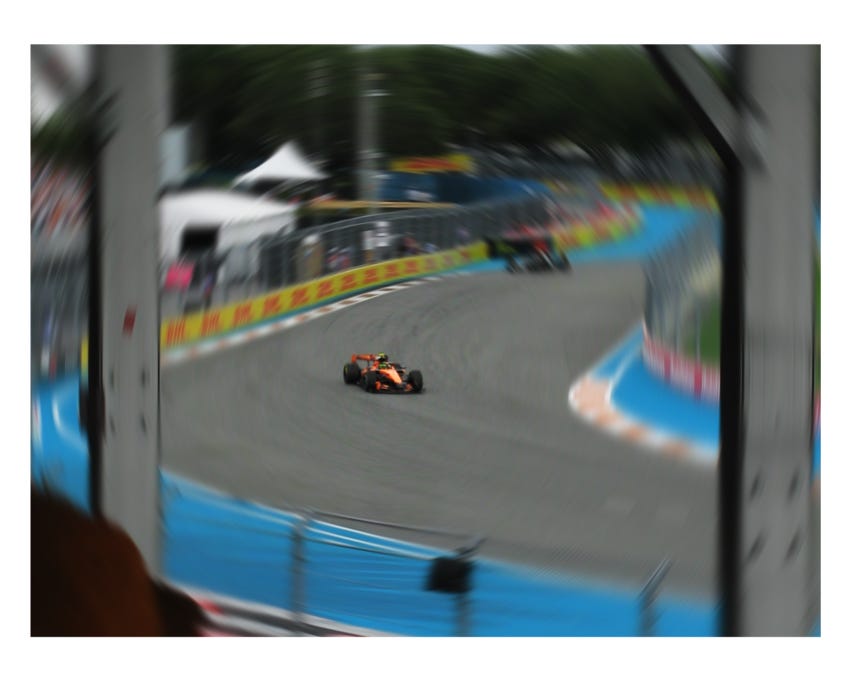
To the racing teams, speed is a coveted resource. But to course architects, it’s almost a curse that needs excessive accommodation in their plans. If you as the audience are not watching these cars slow down to corner (literally pulling a u-turn in some cases), then they are entering and exiting your field of vision so quickly that trying to turn your head to follow them feels like your skull is being unscrewed from your body with a socket wrench. Forcing drivers to slow down and putting the audience there is the only way these course designers can create a watchable experience.
To reach our seats, we needed to cross over the course in a zero visibility tunnel (anti-rubbernecking infrastructure). While up there, the cars hit the track for practice laps. We walked in thinking the movement we’ll see during the race is what everyone wants to experience. We were wrong. That tunnel showed us the motion that draws crowds. Without even seeing them, we heard their engines whining in the distance like TIE Fighters, and then WHAM! They scream under us and we get bodychecked by a phalanx of sound. Jumpscared at 11am on a spring Friday. Maybe this really is a giant Spirit Halloween.
The results of the race don’t matter. Not for my purposes here, anyway. If you follow the sport, you know how to find the results. I certainly hope you haven’t been avoiding spoilers waiting for me to catch you up. If you have been, then it’s not just me who would probably be better off putting his time elsewhere. What I’m really getting at is how it feels to be here in the closed system within which this organization operates. Yes, it needs sponsorships with powerful entities that can provide unholy amounts of capital to survive, but the result is an entirely walled off kingdom of mayhem and merchandise, complete with street preachers warning of fire and brimstone outside the castle walls.
The NFL may have a stranglehold on Sundays for most of the year, but that’s still a collection of “local” events. City-based franchises poured into a shell to create birdshot that peppers the country. Formula 1 is one big slug. It’s why there’s a giant hole in the top of Hard Rock Stadium. Direct impact.
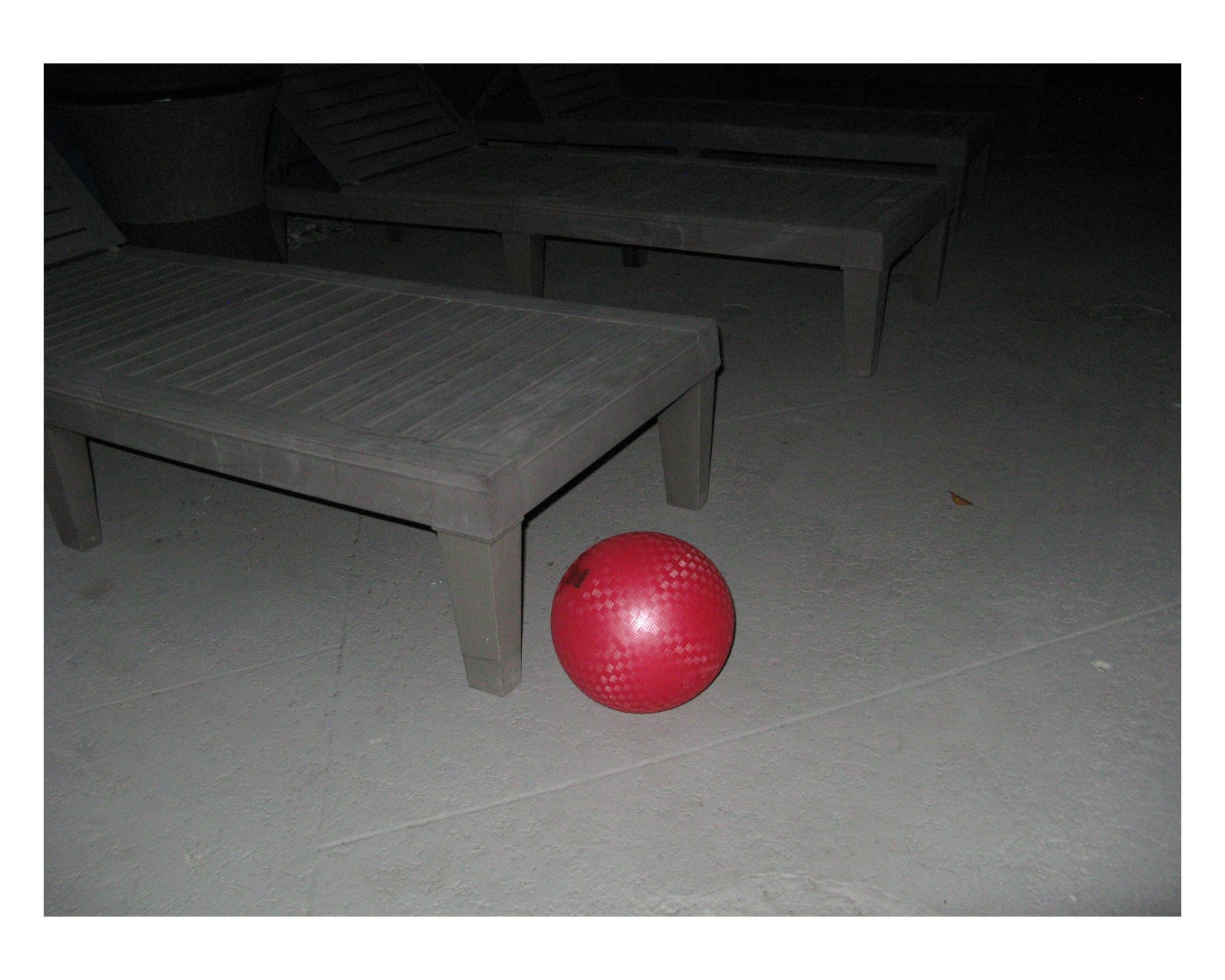
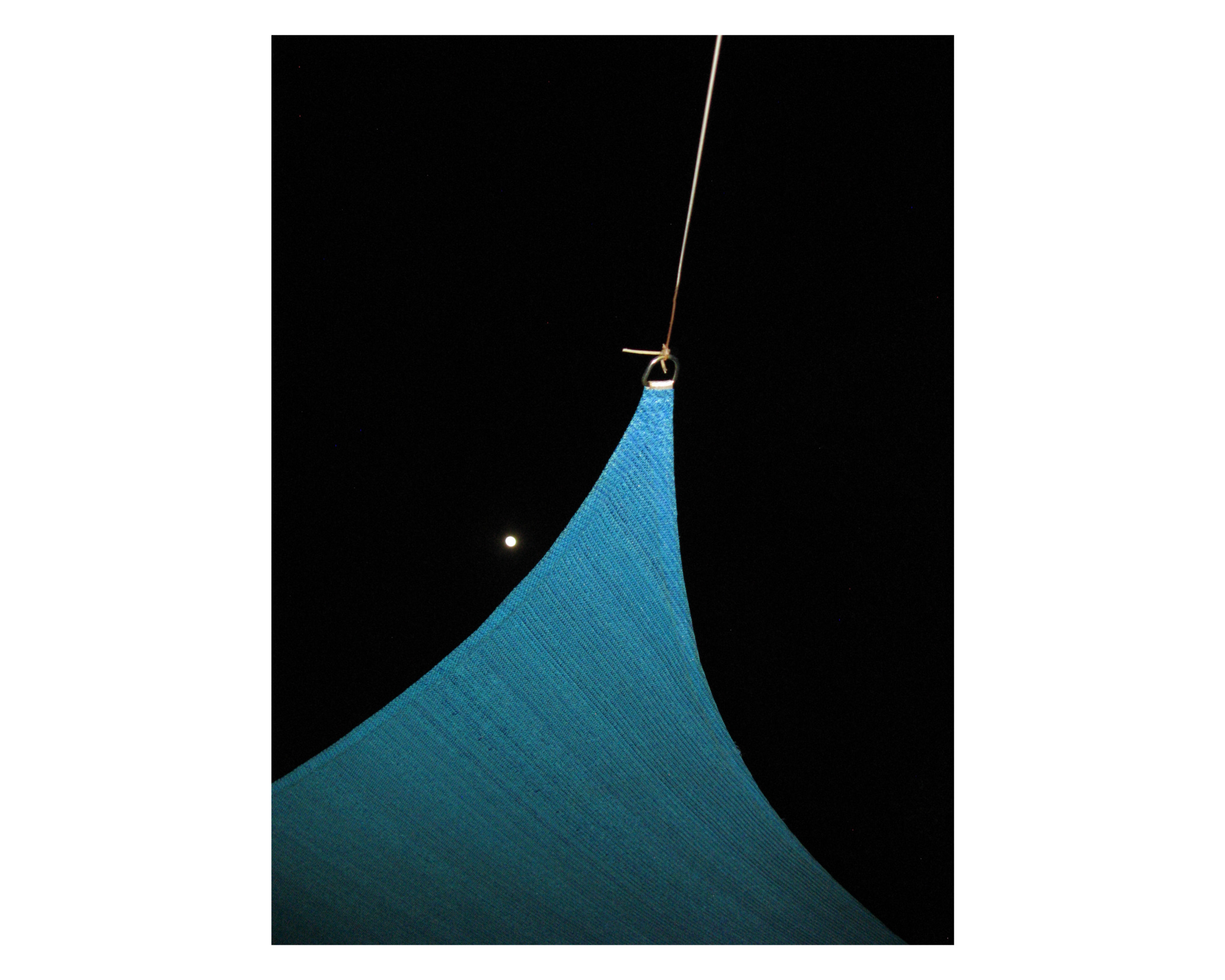
After the race, when the sheen of “new experience” had been washed away by sweat and hot dog water, I finally had a chance to register an uncomfortable truth that doesn’t make the televised broadcast. Any operation this large undeniably alters the surrounding community. How could it not when my seat was one crosswalk away from someone’s bedroom.
Again, I paid $75 to park on an elementary school’s football field so I could dodge mailboxes on the walk to and from the course. I saw a woman pushing her kids on a swing set while ten thousand shmucks from out-of-town and I (also a shmuck) kept walking in and out of her neighborhood for 3 days. You can’t tell me that she or anyone else from the surrounding neighborhoods enthusiastically signed off on this.
Residents protested in the years leading up to the inaugural race over concerns of noise and pollution. Las Vegas residents (in another city with a brand new F1 course) are expressing their displeasure in similar fashion, if not in outright protest acts. A future entry to the race calendar in Madrid also saw protests over the loss of green spaces due to the construction of the course.
It’s clear that these movements have done very little to meaningfully alter the goals or strategy of the greater F1 machine. I say this not as critique of their means or message. Quite the opposite, actually. I think everyone at one time or another has wondered what is really, like, actually within their power to change in a world this heavily steered by multinational business interests. These communities did more for their neighborhoods than I have for mine.
If you think this rings hollow because I still bought tickets and went to see the thing the neighborhood protested, fair enough. But unless you’re the most committed eco-warrior who lives off the grid and grows their own yams for MRE’s, while reading this on a phone you built yourself, you have to admit the moral calculus required to live sustainably (whatever that may mean) in the 21st century isn’t exactly a bundle of easy solutions.
This is the balancing act between participation and ignorance we all perform under an economy of empires. Yes, shopping local can help. Yes, preserving community gardens and green spaces helps. But we both hear the thundering hordes of Capex tearing across the landscape, even when it’s easier than ever to pretend we don’t. Sometimes it sounds like car engines in an international sporting franchise. Other times, a data center, or a 5-over-1 apartment building with a subterranean garage and a cornhole lawn. Money talks, and unless you’re getting paid to plug your ears, it’s deafening - no matter what it sounds like.
Thanks for reading. This was definitely a bit of a departure from my usual format. If you enjoyed it, feel free to let me know. If you didn’t, well, your phone probably has a tomato emoji. Use it at your discretion.